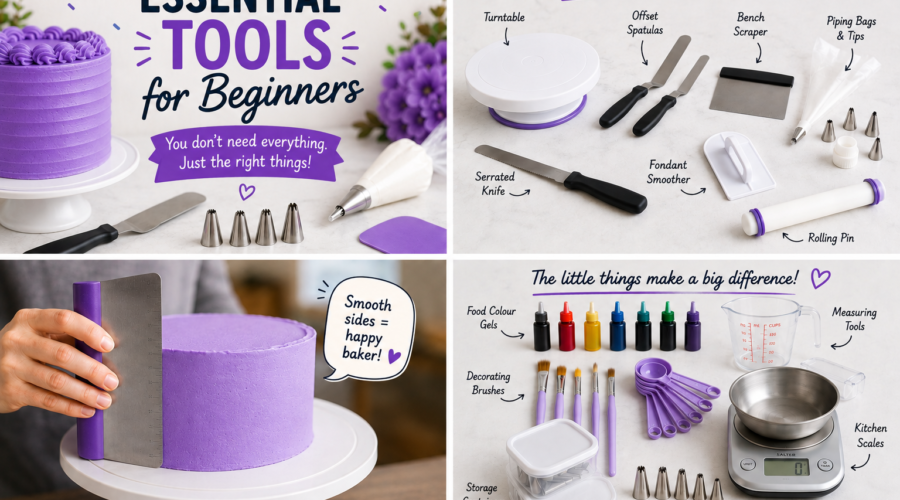
Essential Tools for Beginners in 2026
If you’ve ever stood in the cake decorating aisle staring at hundreds of gadgets, wondering whether you need all of them, you’re not alone.
We’ve all been there. One minute you’re buying a simple spatula, and the next you’re holding a cake airbrush, a set of twelve flower veiners, and something that looks suspiciously like a medieval torture device. Suddenly your hobby cake has turned into a second mortgage.
The good news? You don’t need a professional bakery’s worth of equipment to create beautiful cakes.
When you’re starting out, a handful of quality tools will take you much further than a cupboard full of gadgets you’ll use once and forget about. Let’s look at the essential cake decorating tools every beginner should have in their toolkit.
1. Turntable: Your Cake’s Best Friend
If there is one tool we’d recommend buying early, it’s a cake turntable.
A turntable allows you to spin your cake while decorating, helping you create smoother finishes and more consistent designs. Instead of awkwardly reaching around the cake and accidentally putting your thumb into the buttercream (we’ve all done it), the cake rotates while you stay comfortably in place.
A basic plastic turntable is perfectly fine for beginners, while more experienced decorators may eventually upgrade to a heavier metal version.
Read our review of the best cake turntables for 2026
2. Offset Spatulas
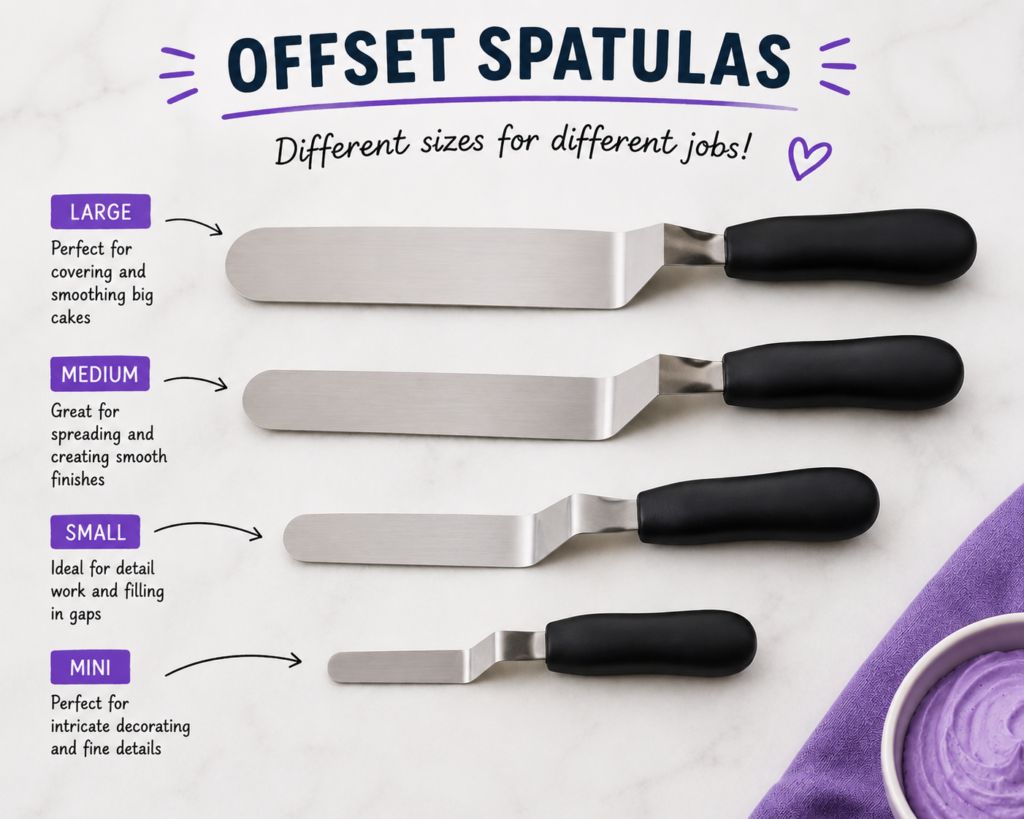
An offset spatula is one of those tools that seems simple but quickly becomes indispensable.
These angled spatulas help spread buttercream smoothly across cakes without your hands getting in the way. Most decorators keep both a small and large version handy.
The larger spatula is perfect for covering cakes, while the smaller one helps with detailed work, filling gaps, and fixing little decorating mishaps.
Because let’s face it—there will be decorating mishaps. Sometimes lots of them.
3. Bench Scraper
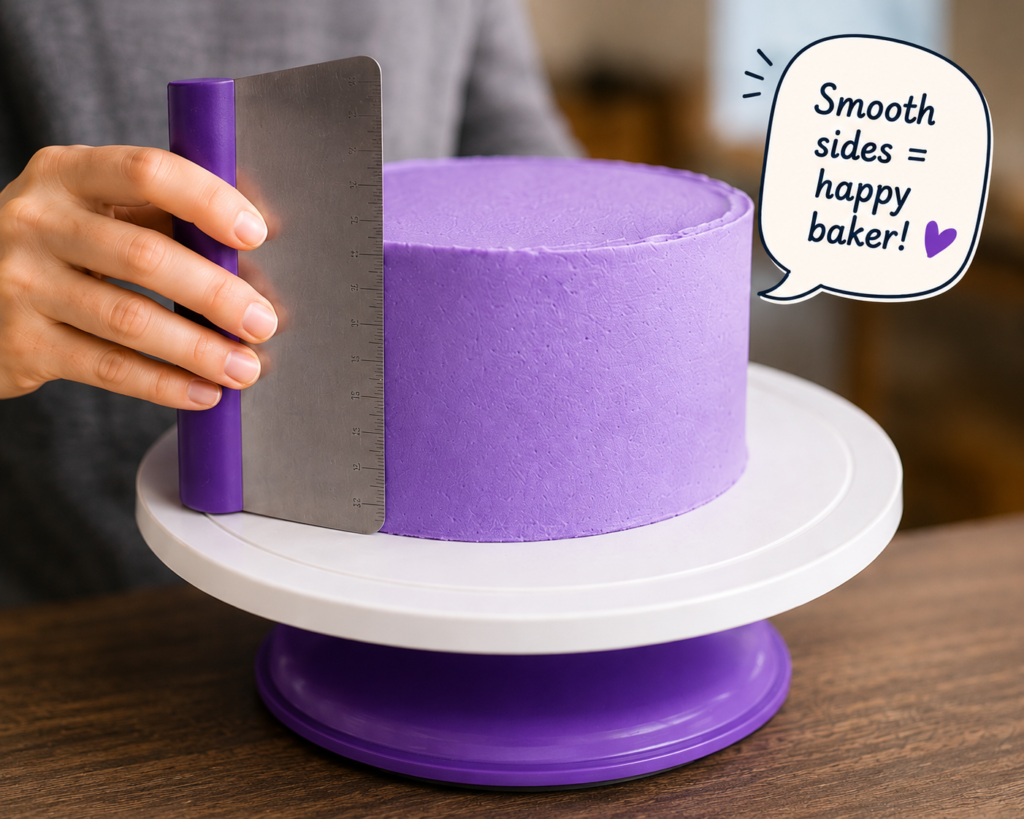
Want those smooth sides you see on Instagram?
You’ll need a bench scraper.
This inexpensive tool is used to smooth buttercream and ganache finishes, creating clean edges and professional-looking sides. Pair it with a turntable, and you’ll be amazed how much easier achieving a neat finish becomes.
The first time you use one successfully, you’ll probably spend ten minutes spinning your cake around just admiring the sides.
No judgement here.
4. Piping Bags and Tips
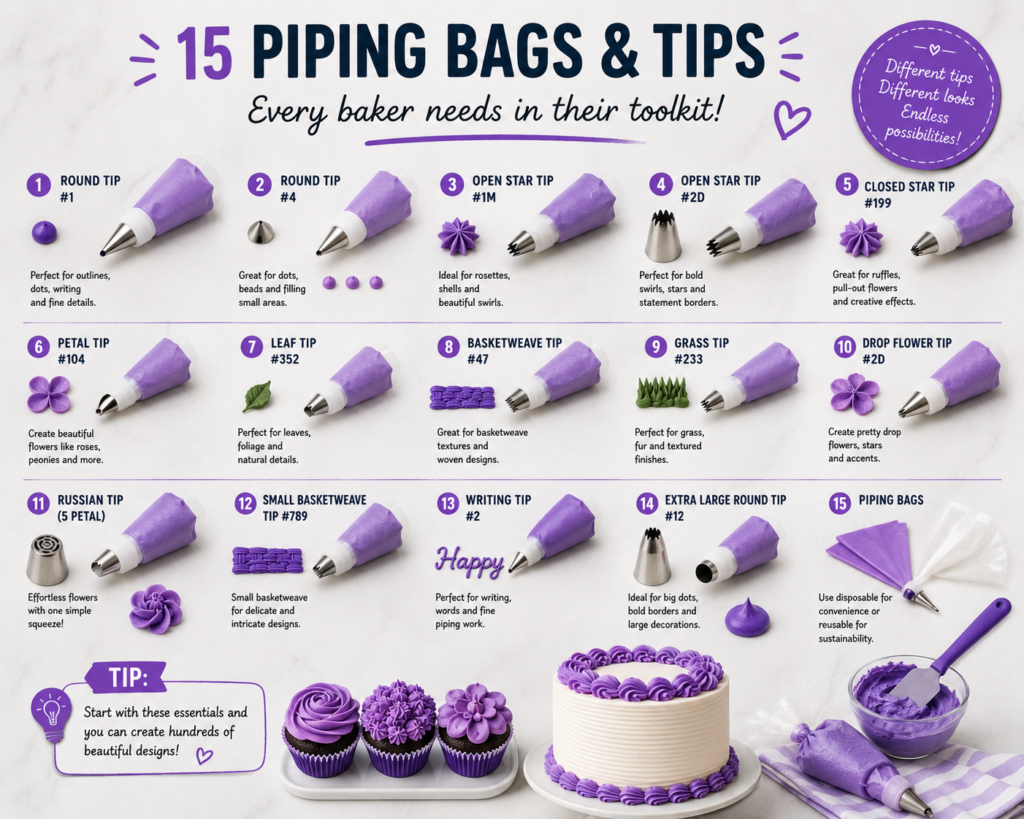
Piping is one of the quickest ways to make a cake look impressive.
Thankfully, you don’t need fifty different piping tips to get started.
A beginner can accomplish a huge range of designs using just a few basic tips:
- Open star tip
- Closed star tip
- Round tip
- Petal tip
- Leaf tip
Disposable piping bags are convenient, while reusable bags are a more environmentally friendly option.
Start simple. Even experienced decorators return to basic piping techniques time and time again.
5. Cake Boards
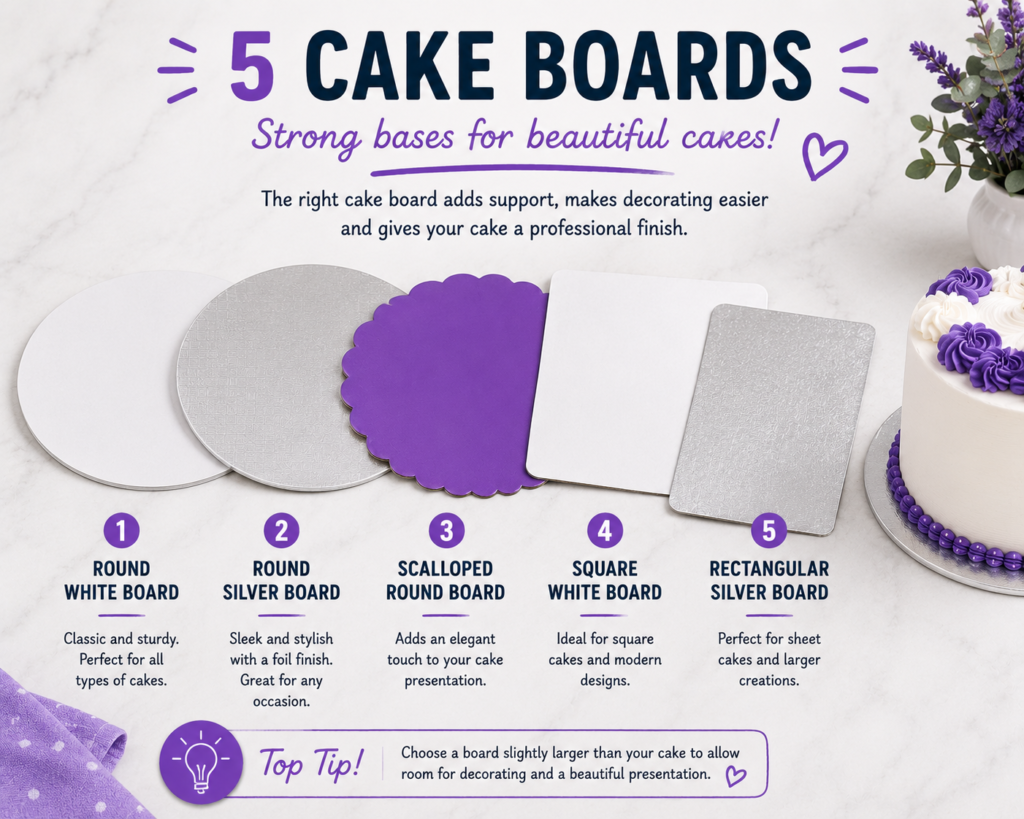
A cake board might not sound exciting, but it’s essential.
Cake boards provide support and stability while decorating, transporting, and displaying your cake.
Without one, moving your masterpiece can become a stressful balancing act worthy of an Olympic event.
Choose boards slightly larger than your cake size to allow room for decorating and presentation.
Trust us—it’s much easier than trying to carry a freshly frosted cake with both hands while opening doors with your elbows.
6. Serrated Cake Knife
A level cake is the foundation of a professional-looking cake.
A serrated cake knife helps trim domed cakes and create even layers ready for filling and stacking.
While dedicated cake levellers are available, many decorators still prefer a good quality serrated knife because of the control it offers.
Take your time and work slowly.
Remember, you can always cut a little more off — but you can’t glue cake back on. Well… not officially.
Read our review of the best serated cake knives for 2026
7. Measuring Tools
Cake decorating is creative.
Baking is science.
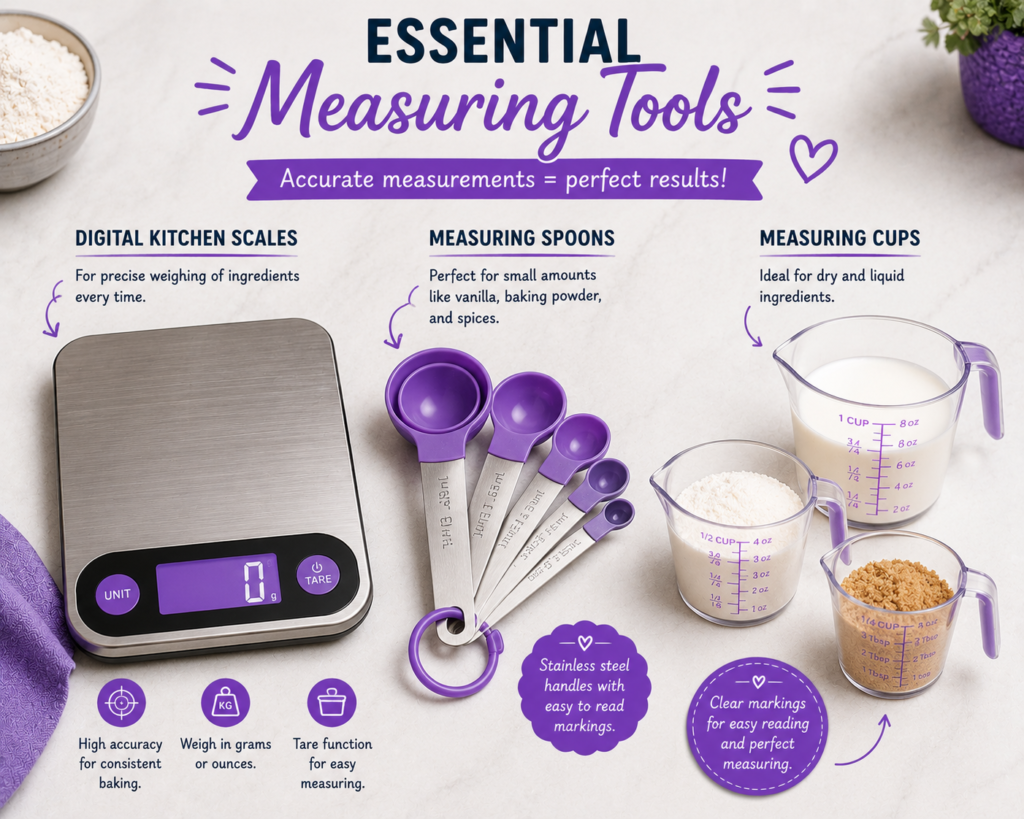
That’s why accurate measuring tools are so important.
Every beginner should have:
- Digital kitchen scales
- Measuring spoons
- Measuring cups
Digital scales are particularly valuable because they provide greater accuracy and consistency.
Nothing ruins decorating plans faster than discovering your buttercream has turned into sweet soup because measurements were guessed.
8. Fondant Smoother
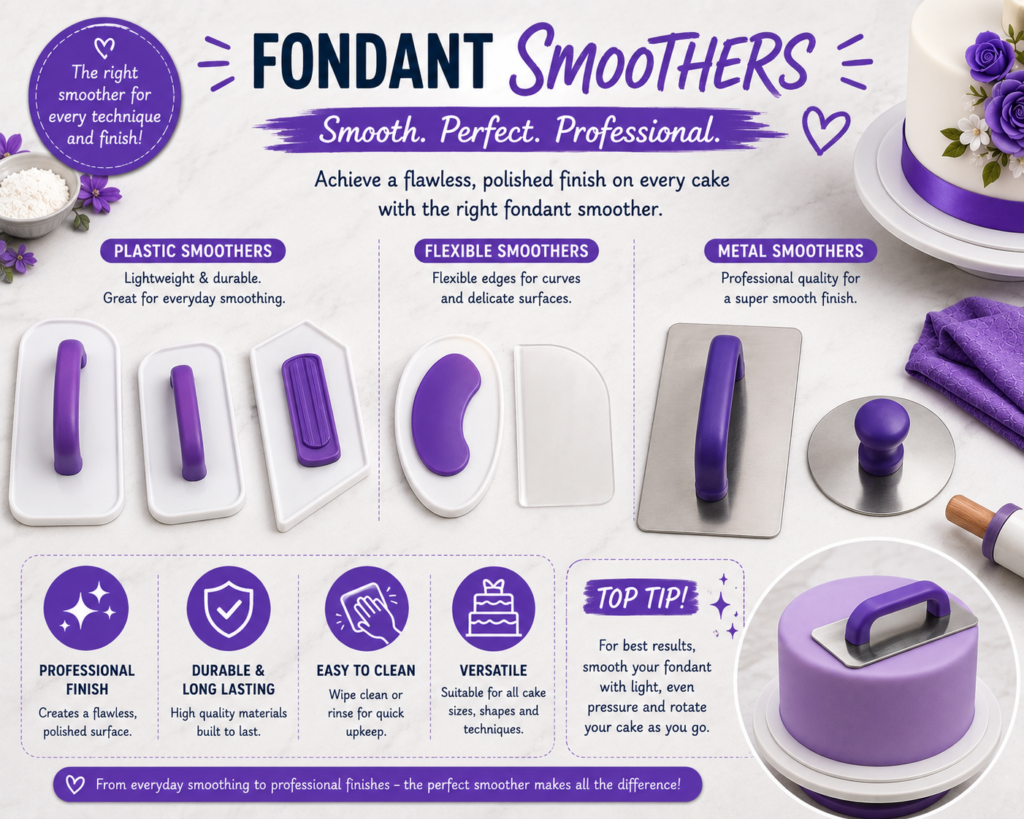
If you’re planning to work with fondant, a fondant smoother is worth adding to your toolkit.
This simple tool helps remove air bubbles, smooth imperfections, and create a polished finish.
It can make the difference between a cake that looks homemade and one that looks professionally finished.
Not that homemade is bad.
But sometimes we all want people asking, “Wait… did you make that yourself?”
9. Rolling Pin
A good rolling pin isn’t just for pastry.
When working with fondant or modelling chocolate, a smooth rolling pin helps achieve even thickness and prevents unwanted bumps.
Many decorators prefer non-stick rolling pins specifically designed for fondant work.
They’re easy to use, easy to clean, and much less likely to leave unexpected patterns across your carefully rolled fondant.
Because nobody wants a mysterious rolling-pin fingerprint across their wedding cake.
10. Food Colouring Gels
Food colouring gels are one of the easiest ways to elevate your cake decorating.
Unlike liquid colours, gels provide vibrant shades without significantly altering the consistency of buttercream or fondant.
Start with a basic colour set including:
- Red
- Blue
- Yellow
- Black
- White
These can be mixed to create countless custom shades.
Be warned though—once you start collecting colours, it becomes surprisingly addictive.
You’ll soon find yourself explaining why you absolutely needed three different shades of dusty rose.
11. Decorating Brushes
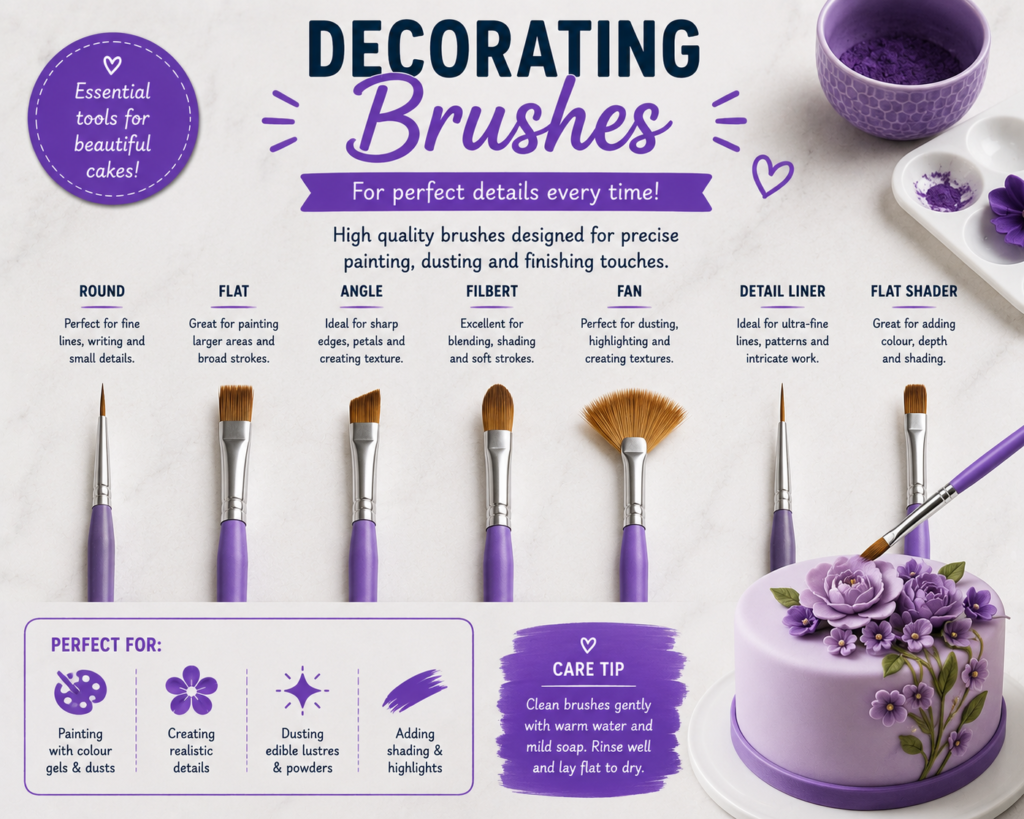
Food-safe decorating brushes are inexpensive and incredibly versatile.
They’re useful for:
- Applying edible dusts
- Painting details
- Adding edible glue
- Creating artistic effects
A small set of brushes can open up many creative decorating possibilities without requiring a large investment.
Think of them as your cake’s makeup kit.
12. Storage Containers
This might be the least glamorous item on the list, but it’s one of the most practical.
Proper storage containers help keep tools organised, protected, and easy to find.
Without them, you’ll eventually discover that piping tips have an uncanny ability to disappear into kitchen drawers forever.
Many beginners underestimate how quickly decorating supplies multiply.
One month you own three tools.
Six months later you’re reorganising cupboards and negotiating shelf space with the rest of the family.
Start Small and Build Slowly
One of the biggest mistakes beginners make is buying everything at once.
The truth is that professional cake decorators often build their tool collections over many years.
Start with the basics. Learn how each tool works. Develop your decorating skills. Then gradually add specialised equipment as your confidence and interests grow.
You don’t need every gadget on the market to create beautiful cakes. In fact, some of the most impressive cakes are made using a surprisingly simple collection of tools and techniques.
Focus on mastering the fundamentals first. The fancy gadgets can wait.
Your wallet will thank you.
Final Thoughts
Cake decorating should be fun, creative, and rewarding—not overwhelming.
With a few essential tools, a willingness to learn, and perhaps a little patience when the buttercream doesn’t quite cooperate, you’ll be well on your way to creating cakes you’re proud to share.
Remember, every professional decorator was once a beginner standing in front of a freshly baked cake wondering what to do next.
The difference is they kept practising. And occasionally ate the evidence when things went wrong.
Happy decorating!
With a sprinkle of creativity and a big dose of heart, your next celebration will be amazing!
And remember the wise words from Julia Child
A Party Without Cake Is Just A Meeting